


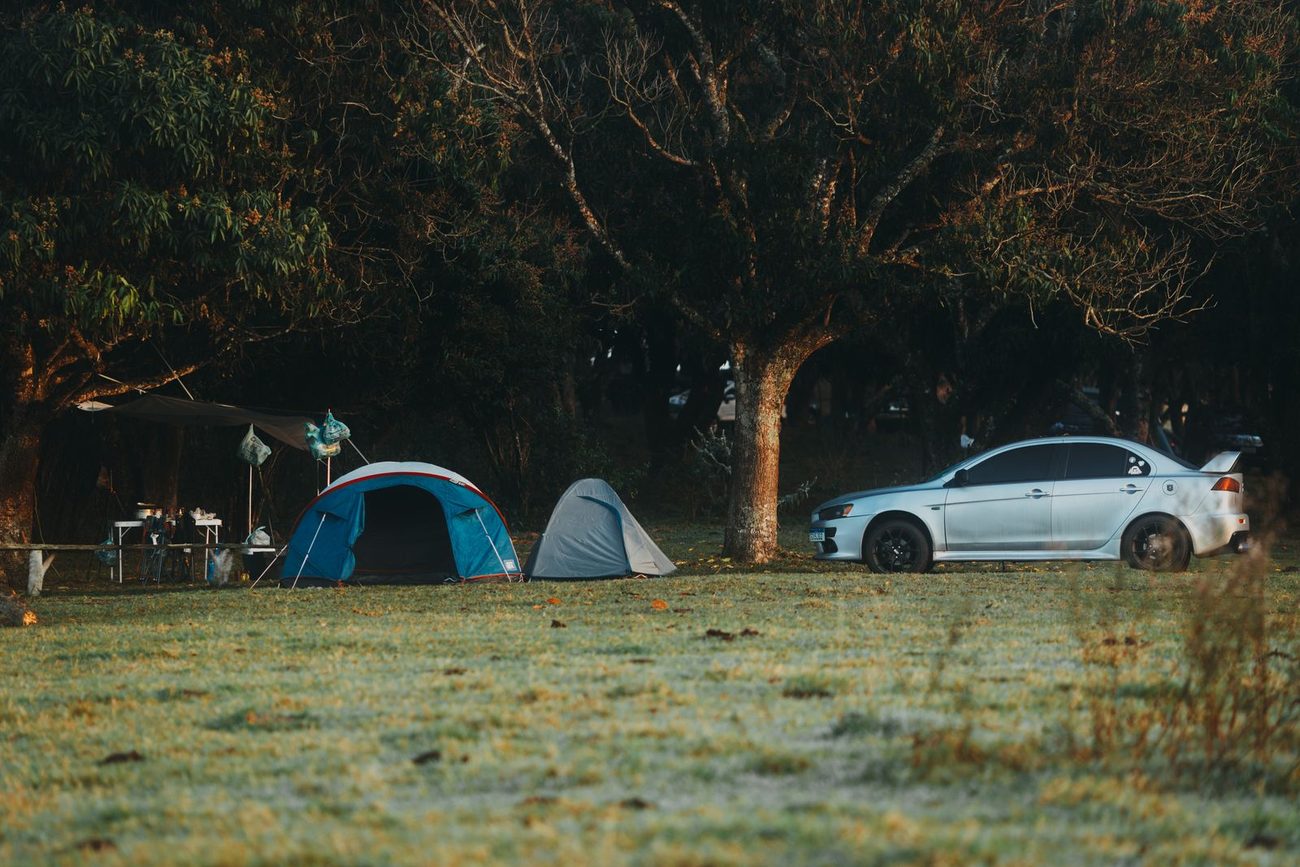
Every fall someone asks me some version of the same question: “How do you stay on track when you’re camping?” And every fall I give the same slightly annoying answer: there is no track. Camping is one of my favorite places to practice intuitive eating, because so much of the usual noise disappears. There is no calorie counter on the picnic table. There is hunger, a cooler, a fire, and whatever sounds good.
My partner and I do most of our camping as road trips, a few nights here and there, usually at KOA campgrounds because they are easy to find along the highway and we know there will be a hot shower at the end of the day. Below is how I actually think about food on those trips, plus an honest look at the KOA Rewards membership we pay for every year, because a reader asked me whether it is worth it.
The “camping diet” I don’t follow
Camping brings out a strange kind of diet talk. People either treat the weekend as a free-for-all they will “pay for” on Monday, or they pack sad little portions and spend two days hungry and cranky. Neither feels good. What works better for me is the same gentle structure I use at home:
- Eat something within an hour or two of waking up. Hiking and pitching a tent on an empty stomach is a fast route to feeling shaky and irritable.
- Aim for a mix at most meals: something with protein, something with carbs, some fat, and a bit of color when it is easy. It does not have to be perfect.
- Pack more snacks than you think you will need. Fresh air and moving all day make most people hungrier, and that is information, not a problem.
- Drink water before you are thirsty, especially at elevation or in dry heat.
- Bring the s’mores. Fun food is part of the trip, and having it on the menu takes the drama out of it.
What is actually in our cooler
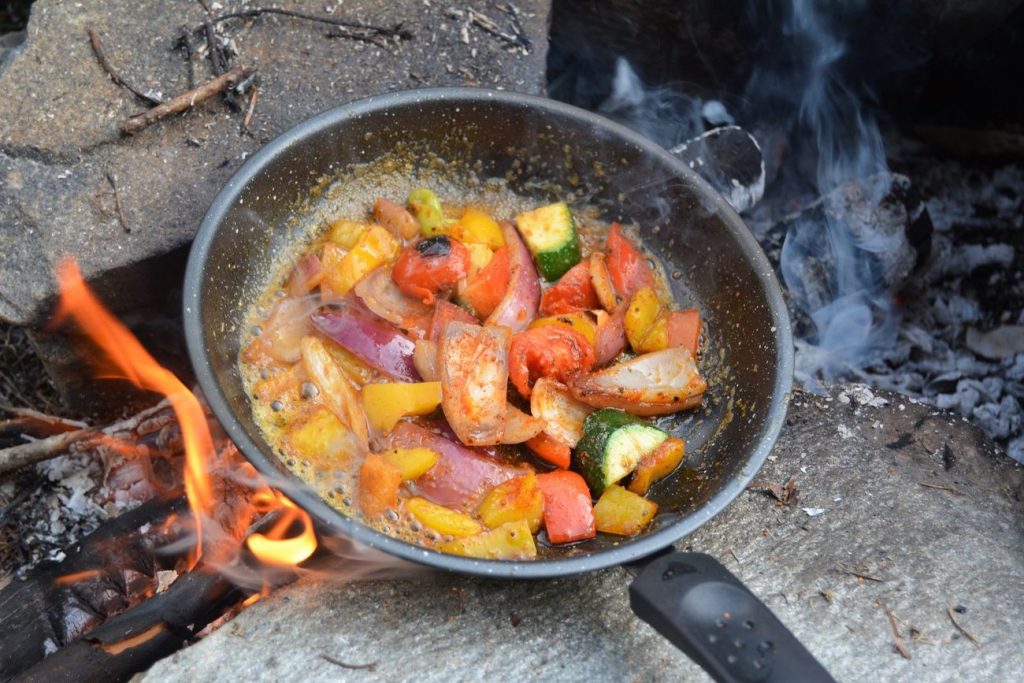
I keep it boring on purpose. Our first-night dinner is almost always a skillet of peppers, onions and zucchini with sausage or chickpeas, served over tortillas or rice we cooked at home. Breakfast is eggs, bread and fruit. Lunch is sandwiches and whatever snacks are already open. Trail mix, cheese sticks, apples, jerky and crackers ride up front in the car so nobody gets hangry on the drive.
The goal is not a perfectly balanced weekend. It is to make eating easy enough that food stops being a project, so we can pay attention to the trip instead.
Why we keep ending up at KOAs
We camp at state parks too, and I love them. But on a long drive, KOA is our default because the logistics are predictable: you can book online, there is almost always one near the interstate, and the bathhouses are clean. When you are cooking for yourself for several days, a hot shower and a decent place to wash dishes make a real difference.
The trade-off is price. A KOA site usually costs more than a state park site. The ones we have booked have run roughly $45 to $75 a night, depending on the season and whether we had a tent site or a spot with hookups. That is exactly why the rewards program caught my attention.
KOA Rewards: what you get for $39 a year
KOA Rewards is an annual membership. At the time of writing it costs $39 a year and includes:
- 10% off the daily registration rate at more than 500 KOA campgrounds
- Rewards points for every night you pay for (roughly 900 to 1,300 points per night at the base level), plus 250 bonus points when you book online
- Points you can trade for money off a future stay: $10 at 6,500 points, $25 at 15,000 and $50 at 25,000
- A free night during KOA Rewards Weekend at participating campgrounds (you have to stay two nights in a row)
- A handful of partner discounts
Members who reach 20,000 points in a membership year move up to VIP, which adds a free renewal, faster points and waived cancellation fees on most site bookings.
Does it pay for itself? The honest math
This is the part I wish more reviews spelled out. Say your site averages $60 a night. The 10% discount saves $6 a night, so the discount alone covers the $39 fee after about seven nights. Add the points, where about six nights booked online gets you to the first $10 reward, and the break-even point drops to roughly five or six nights a year.
With three or four road trips a year, it pays for itself for us without much thought. If you stay at a KOA once a summer for two nights, it will not, and you are better off skipping it.
The fine print (and what I don’t love)
- The 10% only applies to the daily rate. It does not stack with weekly, monthly or seasonal rates, or with other promotions.
- KOA is usually more expensive than public campgrounds to begin with, so a discount on a higher price is not automatically a deal.
- The free night is limited to participating campgrounds and a limited number of sites, and you need to book two consecutive nights.
- The point rewards are modest. $10 for 6,500 points is nice, not life-changing.
- VIP takes 20,000 points in a year, which means a lot of nights. Most casual campers will never get there.
- It is a yearly fee, so put a reminder in your calendar and decide each year whether you still camp enough to use it.
Who it is worth it for
If you already stay at KOAs several nights a year (road-trippers, RV owners, families who like having a pool and a playground nearby), the membership is one of the easier ways to shave a little off the trip, and it takes about two minutes to set up. If you mostly camp at state or national parks, or you only go once a year, keep your $39.
Either way, pack more snacks than you think you need. That part I will stand by.
I’m a certified dietitian working in intuitive eating, body image and recovery from chronic dieting. On this blog I write about making peace with food, at home and, apparently, around the campfire. More about me.
Affiliate disclosure: this site takes part in affiliate programs. When you click a link marked as an affiliate link and make a purchase, the site may earn a commission at no extra cost to you. Commissions never decide what I recommend. This post is general information, not individual medical or nutrition advice. Prices and program terms were checked in October 2026 and can change, so always confirm the current details on koa.com. Full disclosure policy.